What is AI Personalization?
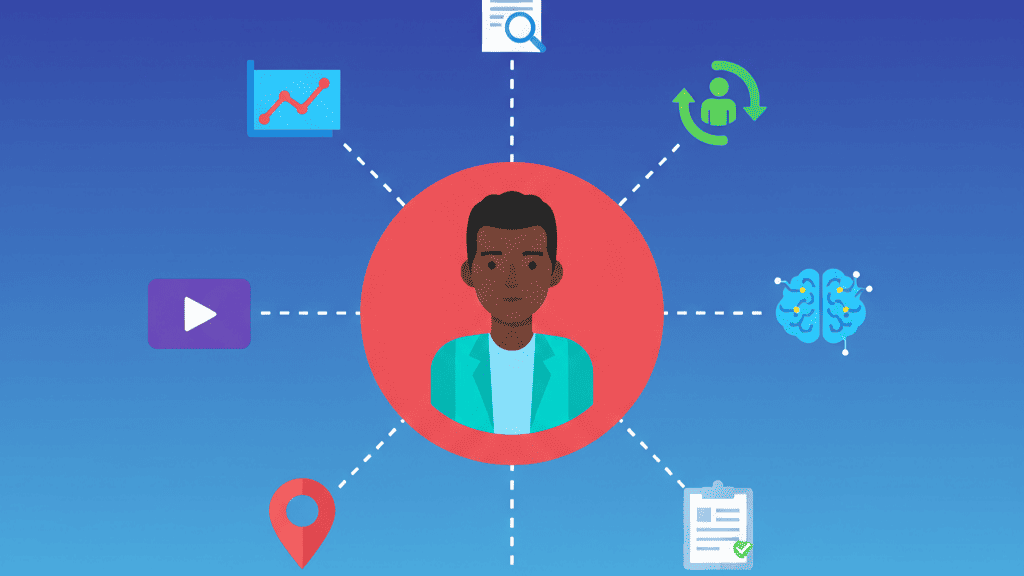
AI personalization uses artificial intelligence to tailor content, recommendations, messaging, products, and experiences based on your behavior, preferences, and data patterns. By analyzing user behavior with machine learning, natural language processing, and generative AI, systems can deliver custom experiences.
AI Personalization Meaning & Why It Matters
At its core, AI personalization means using AI algorithms to customize interactions for individual users, moving beyond one-size-fits-all to intelligent, tailored experiences. It’s not just personalization by segments; it’s real-time insights based on context, behavior, and history.
Modern digital experiences expect personalization. Research shows that 71% of consumers want personalized content, and 67% are frustrated without it. This shift in consumer expectations has made AI personalization a critical component of successful digital strategies.
How AI Personalization Works
AI personalization typically follows a structured process that enables continuous improvement and refinement:
Data Collection: Systems gather user interactions, purchase history, and browsing behavior to build comprehensive user profiles.
Pattern Recognition: Machine learning models analyze this data to deduce preferences and identify behavioral patterns.
Segmentation & Prediction: The AI groups similar users together and predicts their next likely actions based on historical patterns, helping businesses create more effective Ad video content for their target audience.
Real-Time Delivery: Personalized content, products, and messages are served to users at the optimal moment.
Feedback Loop: The AI continuously learns from user responses and refines its recommendations over time.
AI Personalization in Marketing
In marketing, AI personalization analyzes user data to create targeted content and campaigns that feel unique to each user. It can optimize email campaigns, social ads, content recommendations, and targeting, driving higher engagement and ROI.
Real-world marketing applications include predictive segmentation that identifies high-value customer groups, dynamic ad serving that adjusts creative elements based on user characteristics, tailored email copy that speaks directly to individual interests, and omnichannel personalization that creates consistent experiences across touchpoints.
AI Personalization in E-commerce & Online Shopping
AI personalization has reshaped e-commerce by providing smarter product discovery, tailored homepages, dynamic pricing, and custom offers, enhancing conversions and customer satisfaction.
Leading e-commerce platforms now recommend products based on browsing and purchase history, create dynamic homepages customised to each user session, and deploy AI chat assistants that help shoppers find exactly what they want. These capabilities transform the shopping experience from generic browsing to guided discovery.
AI Personalization in UX Design
In UX design, AI personalization enhances usability by adapting content, layouts, and micro-interactions based on user characteristics and preferences, creating experiences that feel natural and intuitive rather than generic. This approach recognizes that different users have different needs, skill levels, and interaction preferences.
AI Personalization in Education
Adaptive learning systems personalize educational content to student performance and learning style, offering tailored practice, feedback, and pacing that align with individual strengths and weaknesses. This individualized approach helps students learn more effectively by meeting them where they are and adapting to their progress.
AI Personalization in Business Beyond Commerce
AI personalization isn’t limited to customer touchpoints. Organizations are increasingly applying these technologies to internal workflows, like training paths, internal support bots, and communications, enhancing productivity and employee experience. This internal application of personalization can significantly improve employee satisfaction and operational efficiency.
Real-World AI Personalization Examples
AI personalization can be seen where users need it the most. Amazon and Netflix have built their competitive advantage partly on recommendation systems driven by historical behavior. Starbucks’ mobile app tailors offers based on individual purchase patterns, creating incentives that feel personally relevant. E-commerce sites across industries use personalized product clusters like “customers also bought” suggestions to guide purchasing decisions.
Top AI Personalization Tools
Popular AI personalization tools help brands automate, scale, and optimize custom experiences. Insider One provides predictive segmentation and omnichannel personalization capabilities. Adobe Target enables real-time content optimization across digital properties. Braze powers AI-driven messaging journeys that adapt to user behavior. Other important categories include customer data platforms, analytics tools, and marketing automation suites that integrate personalization capabilities.
AI Personalization Statistics: Data-Driven Insights
The data clearly demonstrates the importance of personalization in modern digital experiences. As mentioned, 71% of consumers expect personalization from the brands they interact with. Organizations that implement AI personalization effectively see higher engagement rates, improved customer satisfaction scores, and increased revenue growth compared to those using generic approaches.
How to Create a Personalized AI
Creating a personalized AI requires both strategic planning and technical implementation. The process involves several key steps:
- Define goals: Clearly articulate what experience or outcome you’re personalizing and what success looks like.
- Collect & prepare data: Gather relevant user behavior and contextual data while ensuring compliance with privacy regulations.
- Choose a model or platform: Select appropriate machine learning frameworks such as transformers, recommendation engines, or pre-built platforms.
- Train with diverse data: Ensure the model learns patterns relevant to your users by training on representative datasets.
- Measure & iterate: Test effectiveness through A/B testing and other methods, then refine for accuracy and fairness.
- Deploy responsibly: Implement privacy protections, transparency measures, and ethical safeguards from the start.
You can leverage AI platforms like IBM Granite or other machine learning libraries to build and scale personalized experiences tailored to your specific needs.
Challenges & Ethical Considerations
AI personalization brings immense benefits but also presents important challenges that organizations must address. Data privacy and consent remain a crucial concern, requiring transparent data practices and user control. Bias in models can lead to unfair or discriminatory outcomes if training data isn’t carefully curated and monitored. User trust and transparency depend on clear communication about how personalization works and what data is being used.
Brands must balance the desire for personalization with ethical use of consumer data, ensuring that personalization enhances rather than manipulates user experiences.
Conclusion: The Future of Personalization
AI personalization isn’t just a random trend; it’s rapidly becoming an expectation across industries. By blending data, machine learning, and smart automation, organizations can deliver experiences that feel human-centric while driving engagement, loyalty, and revenue. As technology continues to evolve, the gap between businesses that embrace personalization and those that don’t will only widen. The future belongs to organizations that can combine the scale and efficiency of AI with genuinely personalized, valuable experiences for every user.
FAQ
What is AI personalization?
AI personalization uses artificial intelligence to tailor experiences to individual users based on the data they generate through their interactions and behaviors.
What are AI personalization examples?
Common examples include dynamic product recommendations on e-commerce sites, custom email content based on user preferences, and adaptive learning platforms in education.
How is AI personalization used in marketing?
It enables targeted messaging, automated campaigns based on user data, predictive customer segmentation, and personalized content delivery across channels.
What tools support AI personalization?
Leading tools include Insider One, Adobe Target, and Braze, along with various customer data platforms and marketing automation suites.
Can AI personalization improve UX design?
Yes, by adapting interfaces based on user behavior and preferences, AI personalization creates more intuitive and satisfying user experiences.





Leave A Comment