Understanding how to coordinate artificial intelligence systems effectively is crucial for businesses looking to maximize their AI investments.
AI orchestration represents one of the most critical capabilities organizations must develop when scaling AI adoption beyond pilot projects.
This comprehensive guide explores AI orchestration and AI workflows to help you build intelligent systems that deliver measurable business value in 2025.
What is AI Orchestration?
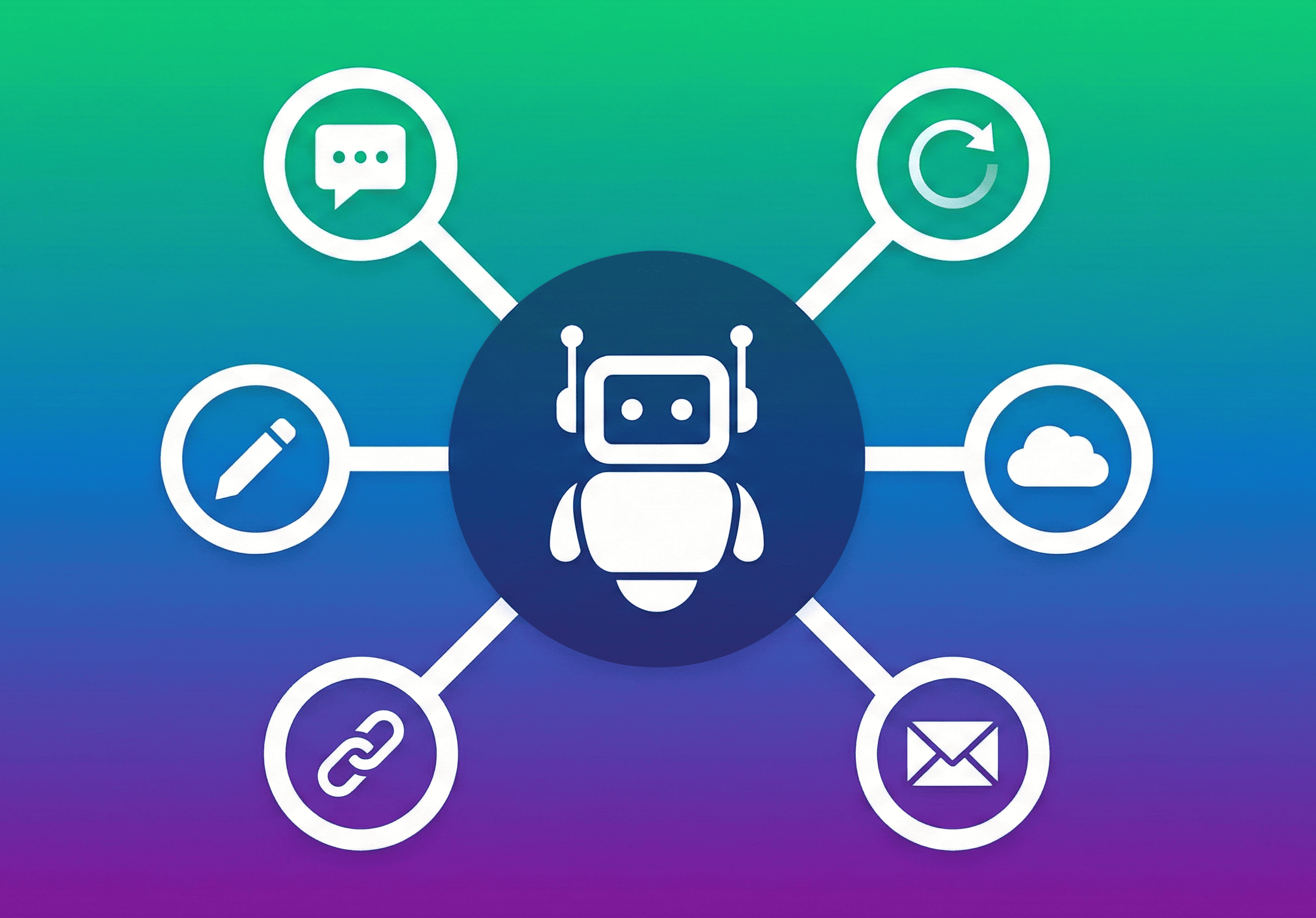
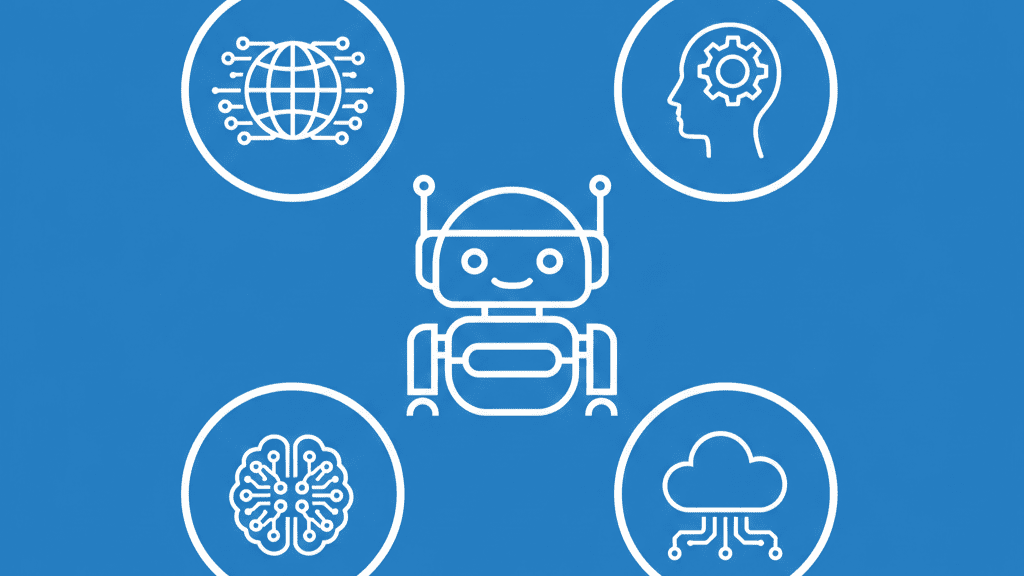
AI orchestration in enterprise computing represents the systematic coordination and integration of multiple artificial intelligence models, platforms, and autonomous agents within a unified business workflows.
AI orchestration provides the framework for connecting disparate AI systems, enabling them to communicate, exchange data, and collaborate on complex processes without manual intervention.
The AI orchestration model delivers intelligent workflow management, including multi-model coordination, automated data pipelines, dynamic decision routing, and governance frameworks on an enterprise-scale basis.
Organizations using AI orchestration gain complete control over their AI ecosystem while eliminating the inefficiencies and risks of managing isolated AI tools and fragmented workflows.
Modern Components of AI Orchestration
Contemporary AI orchestration platforms include cutting-edge capabilities:
- Intelligent Integration Layer: Establishes secure, bidirectional communication channels between AI systems, enabling real-time data synchronization across heterogeneous technology stacks and cloud-native architectures.
- Dynamic Workflow Engines: Context-aware routing and decision logic that extends beyond static rule-based automation, evaluating multiple variables to determine optimal task allocation within AI workflows.
- Multi-Model Coordination: Orchestration frameworks that chain multiple specialized AI models together, where outputs from computer vision models feed into natural language processing systems, which trigger predictive analytics engines.
- Governance and Observability: Comprehensive monitoring, audit trails, and compliance controls with built-in model performance tracking, data lineage management, and regulatory adherence capabilities.
Leading AI orchestration platforms include Apache Airflow, Prefect, Kubeflow, Zapier, Microsoft Power Automate, and LangChain. These platforms now offer agentic AI capabilities, MLOps integration, and carbon-aware computing options for sustainable AI operations.
Benefits of AI Orchestration
Organizations implementing AI orchestration benefit from:
- Operational Efficiency Gains: Automated coordination between AI systems eliminates manual handoffs, reducing process cycle times by 40-60% while minimizing human error and inconsistencies.
- Enhanced Scalability: Auto-scaling AI workflows with intelligent load balancing based on real-time demand, enabling organizations to handle 10x traffic spikes without proportional infrastructure investment.
- Unified Intelligence: Integration frameworks that synthesize insights from multiple AI models, delivering comprehensive analysis that no single model could achieve independently.
- Cost Optimization: Smart resource allocation that routes tasks to appropriate AI models, using expensive GPU-based models only when necessary while handling routine cases with efficient alternatives.
- Accelerated Innovation: Modular architecture enabling rapid experimentation with new AI capabilities by plugging models into existing AI workflows without rebuilding entire systems.
Why AI Orchestration Drives Competitive Advantage?
AI orchestration separates market leaders from organizations struggling to realize AI value. Strategic deployment of coordinated AI workflows creates five sources of sustainable competitive advantage.
The Five Pillars of Competitive Advantage
Pillar 1: Accelerated Time-to-Value
Impact: 10x faster deployment (weeks vs. months)
|
Metric |
Traditional |
Orchestrated |
|
Deployment |
3-6 months |
2-3 weeks |
|
Model testing |
Sequential, 4-6 months |
Concurrent, 2-4 weeks |
Pillar 2: Enhanced Decision Quality
Impact: Multi-model intelligence for complex decisions
Examples:
- Credit Risk: Transaction patterns + Social network + Employment + Biometrics + Economic trends
- Healthcare: Medical imaging + Lab results + Patient history + Symptom analysis with disagreement flagging
Pillar 3: Operational Efficiency
Impact: Dramatic cost reduction through intelligent automation
Cost Savings Breakdown:
|
Category |
Impact / Savings |
Key Driver |
|
Infrastructure Optimization |
30–50% cost reduction |
Smart routing to right-sized compute resources |
|
Labor Cost Reduction |
40–60% time savings |
Elimination of manual coordination |
|
Scalability Economics |
2–3x infrastructure efficiency for 10x workload |
Dynamic scaling with intelligent load balancing |
Pillar 4: Superior Customer Experience
Impact: Contextual intelligence is synthesized in milliseconds
Unified Context: Purchase history + Browsing behavior + Support interactions + Sentiment + Preferences + Predicted needs flow seamlessly across all touchpoints
Pillar 5: Strategic Agility
Impact: Adapt in days instead of months
|
Change Type |
Traditional |
Orchestrated |
|
Risk model adjustment |
2-3 months |
2-5 days |
|
Lending criteria update |
3-4 months |
3-7 days |
|
Fraud detection threshold |
1-2 months |
1-3 days |
Competitive Advantage Maturity Model
Level 1: Isolated AI → Marginal improvements
Level 2: Basic Orchestration → 20-30% efficiency gains
Level 3: Advanced Orchestration → 40-60% efficiency + new capabilities
Level 4: Intelligent Ecosystem → Market leadership, sustainable advantage
Strategic Moat: The combination of integrated data, refined models, optimized workflows, and accumulated learning creates operational capabilities requiring years to replicate.
Orchestration in Action: Leading Tools and Platforms
The AI orchestration landscape divides into three categories serving different user personas and technical requirements.
Platform Selection Framework
Category 1: Enterprise Workflow Orchestration
Apache Airflow
- What: Python-based DAG workflow orchestration
- Key Features: 1000+ operators, dynamic workflows, robust scheduling
- Best For: Data engineers, complex ML pipelines
- Learning Curve: Steep
Prefect
- What: Next-gen workflow engine with hybrid execution
- Key Features: Dynamic workflows, cloud-native, modern observability
- Best For: Platform teams, developer experience-focused
- Learning Curve: Moderate
Kubeflow
- What: Kubernetes-native ML orchestration
- Key Features: End-to-end MLOps, hyperparameter tuning, model deployment
- Best For: K8s environments, full ML lifecycle
- Learning Curve: Steep (requires K8s knowledge)
Category 2: AI-Native Orchestration
LangChain & LangGraph
- What: LLM application orchestration framework
- Key Features: Chain composition, memory management, agent frameworks
- Best For: LLM apps, conversational AI, autonomous agents
- Learning Curve: Moderate
MLflow
- What: Lightweight ML lifecycle management
- Key Features: Experiment tracking, model registry, framework-agnostic
- Best For: Data scientists, multi-framework environments
- Learning Curve: Low
Category 3: Business Process Orchestration
Zapier
- What: No-code visual workflow builder
- Key Features: 8,000+ integrations, AI capabilities, template marketplace
- Best For: Business users, rapid SaaS integration
- Learning Curve: None (drag-and-drop)
Microsoft Power Automate
- What: Enterprise business automation platform
- Key Features: Microsoft 365 integration, AI Builder, RPA capabilities
- Best For: Microsoft-centric orgs, enterprise governance
- Learning Curve: Low
Quick Selection Guide
|
Your Profile |
Recommended Platform |
|
Data Engineer with Python skills |
Airflow or Prefect |
|
ML Team on Kubernetes |
Kubeflow |
|
Building LLM applications |
LangChain |
|
Data Scientist doing experiments |
MLflow |
|
Business user (non-technical) |
Zapier |
|
Microsoft 365 enterprise |
Power Automate |
Multi-Platform Strategy
Most mature organizations use multiple platforms:
Business Users → Zapier/Power Automate
AI Developers → LangChain
ML Engineers → Kubeflow/MLflow
Data Engineers → Airflow/Prefect
Recommendation: Start with one platform aligned to your primary use case, expand as needs grow.
Conclusion
AI orchestration marks a transformative step in how organizations deploy and scale artificial intelligence. By connecting isolated tools into a unified intelligent system, it accelerates value delivery, enhances decision-making, and reduces operational costs.
More than technology, it’s a new way of working, automating coordination so teams can focus on strategy, creativity, and innovation. The journey begins by assessing your current AI setup, identifying high-impact workflows, and starting small to prove value before scaling.
Organizations that master AI orchestration today will lead the competitive landscape of tomorrow.
FAQ
What is AI orchestration?
AI orchestration is the coordinated management of multiple AI models, data flows, and systems to operate as a unified intelligent workflow.
How does AI orchestration differ from workflow automation, MLOps, or AI agents?
Unlike automation or MLOps, AI orchestration synchronizes diverse AI components and agents across processes for seamless end-to-end intelligence.
Why is AI orchestration important for enterprise AI scaling?
It enables organizations to move from isolated pilots to integrated, scalable AI ecosystems that deliver measurable business impact.
What are the core components of an AI orchestration architecture?
Key components include integration layers, dynamic workflow engines, multi-model coordination, and governance frameworks.
Which tools and platforms support AI orchestration?
Popular tools include Apache Airflow, Prefect, Kubeflow, LangChain, MLflow, Zapier, and Microsoft Power Automate.
How does AI orchestration impact governance, compliance, and ethics?
It enforces transparency, traceability, and regulatory compliance through centralized monitoring, audit trails, and ethical controls.









Leave A Comment