
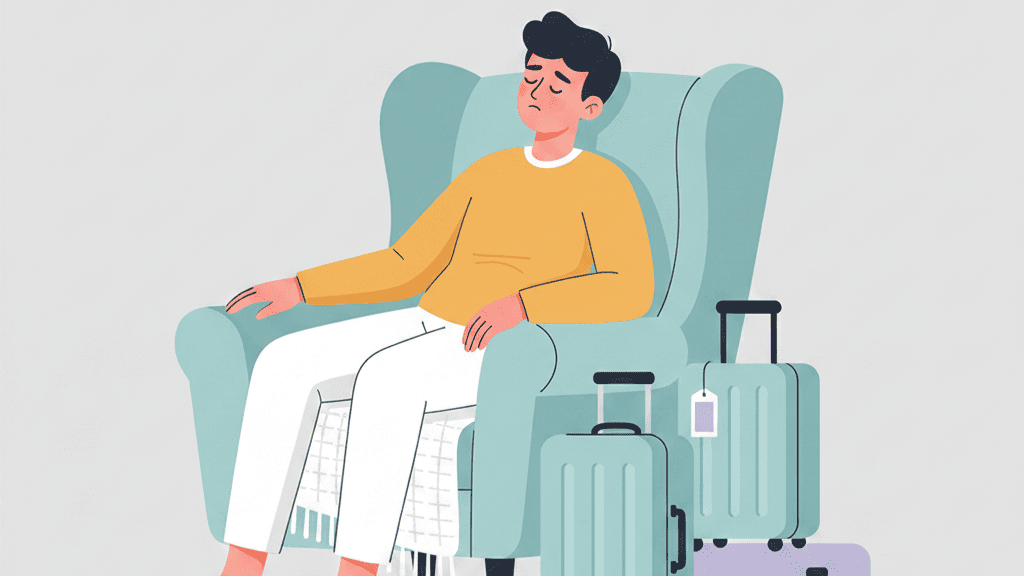
Traveling across time zones can be exhilarating, but the aftermath often leaves us grappling with jet lag.
This comprehensive guide explores everything you need to know about jet lag, from understanding what it means to discovering effective treatments, prevention strategies, and how AI is making strides in this context.
What is Jet Lag?
Jet lag is a temporary circadian rhythm sleep disorder that occurs when you travel rapidly across multiple time zones, disrupting your body’s internal clock.
In olden times, planes, ships, and trains moved slowly enough that travelers could gradually adjust to new time zones.
The term “jet lag” gets its name from the era of jet aircraft, which made rapid long-distance travel possible for the first time.
Jet lag fundamentally represents a mismatch between your circadian body clock and the local time at your destination.
Jet lag is not an illness but a physiological timing conflict between:
- Your internal circadian clock
- External cues such as daylight, meal timing, and social schedules
Understanding Circadian Rhythms
To grasp jet lag fully, we must first understand circadian rhythms.
Circadian rhythms are 24-hour biological cycles that regulate sleep, hormone secretion, body temperature, digestion, mood, immune function, and cognitive performance.
These rhythms are primarily regulated by the suprachiasmatic nucleus (SCN) in the brain and are synchronized by light exposure.
It becomes misaligned with environmental cues like sunlight and social schedules.
So what are Circadian Rhythms?
In simple terms, it’s your body’s internal timekeeper that tells you when to feel alert and when to feel sleepy.
The circadian rhythm’s meaning extends beyond just sleep – it influences digestion, mood, cognitive performance, and immune function.
Your circadian cycle operates through complex interactions between brain cells, hormones, and environmental light cues.
The circadian pattern typically aligns with daylight hours, promoting alertness during the day and sleepiness at night.
This circadian rhythmicity evolved over millions of years to match Earth’s day-night cycle.
Circadian Rhythm Disorders
Jet lag is one type of circadian disorder, alongside conditions like delayed sleep phase type and other sleep phase disorders.
The circadian cycle definition helps us understand that these disruptions occur when your internal clock falls out of sync with external time cues.
The meaning of circadian rhythm encompasses how these biological processes maintain synchronization with the 24-hour day, or from am to pm if you follow the 12-hour clock pattern.
Circadian sleep patterns are particularly sensitive to disruption (like staying awake late at night), which is why jet lag primarily affects sleep quality and timing.
Jet Lag Symptoms
Jet lag symptoms can vary significantly between individuals and trips.
Understanding what jet lag feels like helps you identify and address the condition effectively.
The 5 Main Symptoms of Jet Lag
- Sleep Disturbances: Difficulty falling asleep, staying asleep, or waking up at odd times
- Daytime Fatigue: Overwhelming tiredness during local daytime hours
- Cognitive Impairment: Difficulty concentrating, memory problems, and reduced mental clarity (Brain Fog)
- Digestive Issues: Upset stomach, constipation, loss of appetite, or eating at odd hours
- Mood Changes: Irritability, anxiety, or mild depression
Additional Symptoms
Beyond the primary five, jet lag can also cause:
- Headaches and muscle aches
- Dizziness and general malaise
- Dehydration and reduced immune function
- Disrupted body temperature regulation
The severity depends on factors like the number of time zones crossed, direction of travel, individual sensitivity, and age.
Duration and Recovery Time
How Long Does Jet Lag Last?
A widely accepted rule of thumb is:
1 day of recovery per time zone crossed
However, this is an average estimate, not a guarantee.
Eastward travel typically results in slower adaptation because it requires a phase advance, which the human circadian system resists more than phase delays (westward travel).
For example, if you cross six time zones, expect approximately six days for complete adjustment.
Factors Affecting Recovery Time
Several factors influence how long jet lag persists:
- Direction of travel: Eastward travel typically causes more severe jet lag
- Number of time zones: More zones mean longer recovery
- Age: Older adults often experience longer-lasting effects
- Individual differences: Some people naturally adjust faster
- Pre-travel preparation: Strategic planning can reduce duration
Why is Jet Lag Worse Coming Home?
Many travelers notice that jet lag is worse coming home, and there’s science behind this phenomenon.
When traveling eastward (which often occurs when returning home from westward destinations), you’re essentially shortening your day and asking your body to advance its clock.
This “phase advance” is typically harder for the human circadian cycle to accommodate than “phase delay” (staying up later when traveling west).
Additionally, the anticipation and stress of returning to work and daily responsibilities can compound the physical effects of jet lag, making the symptoms feel more severe.
Treatment Options
Effective jet lag treatment involves multiple strategies that work together to help reset your circadian body clock.
Light Therapy for Jet Lag
Jet lag light therapy is one of the most scientifically supported treatments.
Light exposure at specific times can help reset your circadian sleep patterns:
- Morning light exposure helps advance your clock when traveling east
- Evening light exposure helps delay your clock when traveling west
- Light therapy devices can provide controlled, bright light when natural sunlight isn’t available
Avoiding white light that is emitted from devices like mobiles, laptops, and televisions helps in recovery.
Jet Lag Pills and Supplements
Several jet lag pills and supplements show promise:
Melatonin: The most studied supplement for jet lag
- Helps regulate circadian rhythmicity
- Most effective when taken at appropriate times
- Generally safe for short-term use
Prescription Sleep Aids: For severe cases, under medical supervision
- May include short-acting sleep medications
- Should be used cautiously and temporarily
Natural Supplements: Including magnesium, valerian root, and chamomile
- Support relaxation and sleep quality
- Fewer side effects than prescription options
Behavioral Strategies
- Gradual schedule adjustment before travel
- Strategic caffeine use to promote alertness when needed
- Proper hydration and nutrition timing
- Exercise timing to reinforce new sleep schedules
The best jet lag remedy combines multiple strategies rather than relying on a single solution.
Technology Solutions and Apps
Modern technology offers sophisticated tools for managing jet lag, with apps for jet lag becoming increasingly sophisticated and personalized.
Top Apps for Jet Lag Management
Premium Applications
- Timeshifter (The Gold Standard): The Time Shifter app is considered the most advanced app for jet lag:
- Personalized light schedules based on NASA research
- Individual chronotype assessment for customized recommendations
- Real-time adjustments for flight delays and changes
- Scientific backing from circadian rhythm experts
- Integration with wearable devices for sleep tracking
- StopJetLag (Comprehensive Planning): Professional-grade jet lag treatment planning:
- Detailed pre-travel preparation schedules
- Meal timing recommendations to support circadian rhythm adjustment
- Activity suggestions for faster adaptation
- Multi-trip planning for complex itineraries
- Email reports with personalized schedules
Free and Accessible Options
- Jet Lag Rooster: A free app for jet lag that offers:
- Simple jet lag recovery calculator
- Basic light therapy recommendations
- Sleep schedule suggestions
- Easy-to-follow advice for different time zones
- Offline functionality for international travel
- Uplift – Jet Lag App: Focuses on circadian rhythm optimization:
- Light exposure tracking and recommendations
- Personalized advice based on travel direction
- Symptom tracking to monitor jet lag symptoms
- Progress monitoring for recovery assessment
- Simple interface for easy use while traveling
Sleep and Wellness Integration
- Sleep Cycle: While primarily a sleep tracker, it offers jet lag support features:
- Sleep pattern analysis to understand your circadian body clock
- Smart alarm that wakes you during lighter sleep phases
- Travel mode for adjusting to new time zones
- Detailed sleep statistics to track recovery progress
- Integration with Apple Health and Google Fit
- AutoSleep (Apple Watch): Automatic sleep tracking that helps with jet lag recovery:
- Passive sleep monitoring without user input
- Heart rate analysis during sleep
- Sleep quality metrics to track circadian sleep patterns
- Time zone adjustment features
- Integration with other health apps
Supportive Wellness Apps
- Calm: Popular wellness app with travel-specific features:
- Sleep stories to improve circadian sleep quality
- Travel anxiety meditations
- Power nap sessions with gentle wake-up sounds
- Daily meditation to maintain routines
- Offline downloads for international use
- Headspace: Mindfulness app with sleep and travel support:
- Sleep-focused content for better circadian rhythm alignment
- Travel stress management techniques
- Focus sessions for combating jet lag fatigue
- SOS sessions for difficult adjustment moments
- Progress tracking for building healthy habits
- Insight Timer: Meditation app with jet lag-specific content:
- Sleep meditations for adjustment difficulties
- Guided relaxations for travel stress
- Timer functions for strategic napping
- Global community for motivation during recovery
- Free content with premium options
- Noisli: Supports jet lag treatment through better sleep:
- Background noise and nature sounds for sleep
- Timer functions for power naps and sleep schedules
- Productivity features to maintain routines while adjusting
- Offline capability for use during flights
- Customizable soundscapes for relaxation
Jet lag apps do not cure jet lag, but they optimize circadian adjustment strategies by personalizing:
- Light exposure timing
- Sleep schedules
- Meal timing
Apps like Timeshifter and StopJetLag are based on peer-reviewed circadian research but should be viewed as decision-support tools, not medical treatments
When selecting an app for jet lag, consider:
Travel Frequency:
- Occasional travelers: Free apps like Jet Lag Rooster may suffice
- Frequent business travelers: Premium apps like the Time Shifter app offer more sophisticated features
- Complex itineraries: Multi-destination planning apps provide comprehensive support
Technology Preferences:
- Simple interface: Basic recommendation apps
- Data enthusiasts: Apps with detailed analytics and tracking
- Wearable users: Apps with smartwatch integration
- Offline access: Apps that work without an internet connection
Specific Needs:
- Severe symptoms: Medical-grade apps with professional backing
- Sleep disorders: Apps that address underlying circadian rhythm disorders
- Shift workers: Apps designed for delayed sleep phase type and other sleep phase disorders
- International business: Apps with global time zone databases
If your needs are not met, consider making your own app or making software that can fulfill all your needs.
AI in Jet Lag Treatment
Artificial Intelligence is revolutionizing how we understand, predict, and treat jet lag and circadian rhythm disorders.
AI-powered solutions are making personalized jet lag treatment more accessible and effective than ever before.
AI-Powered Personalization
Traditional jet lag advice follows a one-size-fits-all approach, but AI enables truly personalized recommendations by analyzing:
- Individual circadian patterns from wearable device data
- Historical travel and sleep data to predict personal responses
- Real-time biometric feedback, including heart rate variability and body temperature
- Environmental factors like destination weather and light conditions
- Personal preferences and travel constraints
Machine Learning in Circadian Research
AI and machine learning are accelerating circadian rhythm research in several ways:
Pattern Recognition: AI algorithms can identify subtle patterns in circadian rhythmicity data that humans might miss, leading to a better understanding of individual circadian body clock variations.
Predictive Modeling: Machine learning models can predict how severely someone will experience jet lag symptoms based on factors like age, chronotype, travel direction, and previous experiences.
Drug Discovery: AI is helping researchers identify new compounds for jet lag pills and treatments by analyzing molecular interactions with circadian pathways.
Smart Technology Integration
Wearable Technology and AI
The combination of wearable devices and AI is creating powerful tools for managing circadian sleep patterns:
Continuous Monitoring: Smartwatches and fitness trackers collect data on:
- Sleep stages and duration
- Heart rate variability
- Body temperature fluctuations
- Light exposure levels
- Activity patterns
AI Analysis: Machine learning algorithms process this data to:
- Identify individual circadian pattern signatures
- Predict optimal sleep and wake times
- Recommend personalized jet lag light therapy schedules
- Detect early signs of circadian cycle disorder
Virtual Health Assistants
AI-powered health assistants are becoming sophisticated enough to provide personalized jet lag treatment guidance:
Conversational AI: Chatbots can provide real-time advice on managing symptoms, adjusting to new time zones, and optimizing recovery strategies 24/7.
Symptom Tracking: AI assistants can help users log and analyze jet lag symptoms, identifying patterns and triggers.
Integration with Healthcare: Advanced systems can alert healthcare providers when symptoms suggest underlying sleep phase disorders requiring professional attention.
AI-Enhanced Light Therapy
Jet lag light therapy is being enhanced through AI in several ways:
Smart Light Devices: AI-controlled light therapy devices automatically adjust:
- Light intensity based on individual sensitivity
- Color temperature for optimal circadian rhythm impact
- Timing based on travel schedules and personal patterns
- Duration based on progress toward adjustment
Environmental Integration: AI systems can coordinate with smart home technology to optimize lighting conditions for circadian health during travel recovery.
Future AI Applications
Emerging AI technologies promise even more advanced jet lag solutions:
Digital Twins: AI could create digital models of individual circadian cycles, allowing for precise simulation and optimization of travel schedules.
Genetic Analysis: AI interpretation of genetic data could identify individuals with specific circadian rhythm disorder susceptibilities and customize treatments accordingly.
Predictive Travel Planning: Advanced AI could analyze global travel patterns, weather data, and individual factors to recommend optimal travel times and routes for minimal jet lag impact.
Augmented Reality: AR applications could provide real-time guidance on light exposure, meal timing, and activity scheduling based on AI analysis of current circadian status.
Current AI Applications in Practice
AI-Enhanced Recovery Strategies: Current AI applications are already improving traditional jet lag remedies:
Optimized Scheduling: AI determines the best times for:
- Light exposure based on individual circadian rhythmicity
- Meal timing to support circadian adjustment
- Exercise periods to reinforce new sleep schedules
- Social activities to provide environmental cues
Dynamic Adjustments: Unlike static advice, AI can modify recommendations based on:
- Real-time progress toward adjustment
- Unexpected travel delays or changes
- Individual response to treatments
- Environmental factors at the destination
Challenges and Considerations
While AI offers tremendous potential for jet lag cure development, several challenges remain:
- Data Privacy: Personal health and travel data require careful protection
- Algorithm Bias: AI systems must be trained on diverse populations
- Clinical Validation: AI-generated recommendations need rigorous testing
- User Trust: Building confidence in AI recommendations requires transparency
Prevention Strategies
How Do You Fix Jet Lag? A Step-by-Step Approach
To effectively address and prevent jet lag:
Pre-Travel Preparation (3-7 Days Before)
- Gradual Schedule Adjustment:
- Shift sleep and wake times by 15-30 minutes daily
- Use a jet lag recovery calculator to plan your strategy
- Consider your circadian pattern and plan accordingly
- Light Exposure Management:
- Increase morning light exposure for eastward travel
- Extend evening light exposure for westward travel
- Use jet lag light therapy devices if needed
- Health Optimization:
- Maintain consistent sleep hygiene.
- Stay hydrated and eat nutritious meals.
- Avoid excessive alcohol and caffeine.
During Travel
- Immediate Adjustments:
- Set your watch to the destination time immediately
- Adjust meal times to the destination schedule
- Stay hydrated and avoid excessive alcohol
- Strategic Rest:
- Sleep according to the destination time if possible
- Use eye masks and earplugs
- Consider compression socks for circulation
Post-Arrival (First 48 Hours)
- Light Management:
- Get sunlight exposure during local daytime.
- Avoid bright light during local nighttime.
- Use jet lag light therapy if natural light is limited.
- Activity Regulation:
- Stay active during local daylight hours.
- Avoid napping longer than 30 minutes.
- Exercise moderately to boost energy.
- Routine Establishment:
- Eat meals according to local time.
- Maintain consistent bedtimes
- Engage in local activities and social interactions.
Long-term Prevention Strategies
- Travel Planning: Choose flights that arrive in the evening when possible
- Frequent Traveler Programs: Develop personalized protocols
- Health Maintenance: Address underlying circadian rhythm disorders
Special Considerations
Circadian Rhythm Disorders
Some individuals have underlying circadian cycle disorders that make jet lag more challenging:
Delayed Sleep Phase Type
People with delayed sleep phase type naturally prefer later bedtimes and may find eastward travel particularly difficult. They may need:
- Extended adjustment periods
- More aggressive light therapy
- Professional guidance for severe symptoms
Advanced Sleep Phase
Those with an advanced sleep phase prefer earlier schedules and may struggle more with westward travel.
Non-24-Hour Sleep-Wake Disorder
This rare condition involves circadian patterns that don’t align with the 24-hour day, making jet lag recovery particularly complex.
Age-Related Considerations
Children and Adolescents: May adjust faster but can experience more severe initial symptoms
Older Adults: Often take longer to recover and may need gentler adjustment strategies
Middle-aged Adults: May experience the most consistent jet lag patterns
Special Populations
Business Travelers
- Use apps for jet lag to optimize short trips
- Prioritize consistent sleep hygiene
- Consider staying at home for very short trips (less than 48 hours)
Vacation Travelers
- Allow extra recovery time in your itinerary
- Focus on enjoying the experience rather than fighting symptoms
- Use jet lag light therapy devices if staying in locations with limited sunlight
Frequent Flyers
- Develop personalized protocols based on experience
- Consider professional consultation for severe cases
- Track patterns in your circadian rhythm responses
When to Seek Professional Help
Medical Consultation Recommended When:
- Severe symptoms lasting more than a week
- Underlying sleep disorders that complicate recovery
- Multiple circadian rhythm disorders affecting daily life
- Symptoms significantly impacting work or personal relationships
- Recurring travel causes chronic sleep disruption
Healthcare Provider Options
- Sleep Medicine Specialists: For complex circadian rhythm disorders
- Travel Medicine Doctors: For frequent travelers with persistent issues
- Primary Care Physicians: For general guidance and initial evaluation
Professional Treatment Options
- Prescription medications for severe cases
- Professional light therapy protocols
- Cognitive behavioral therapy for sleep disorders
- Comprehensive sleep studies if underlying conditions are suspected
The Science Behind Jet Lag Research
Current Research Directions
While there’s no instant jet lag cure, ongoing research continues to improve our understanding of circadian rhythm disorders.
Scientists are investigating:
- Genetic factors influencing individual susceptibility to jet lag
- New light therapy protocols for faster adjustment
- Pharmacological interventions beyond traditional sleep aids
- Chronotherapy techniques for treating circadian disorders
- Environmental interventions to support natural adjustment
Future Developments
Research is moving toward:
- Personalized medicine approaches based on genetic profiles
- Advanced wearable technology for real-time monitoring
- Improved AI algorithms for prediction and treatment
- Novel therapeutic targets in the circadian system
Conclusion
Understanding jet lag means recognizing it as a temporary circadian disorder that affects millions of travelers worldwide.
While the effects can be challenging, combining scientific knowledge with practical strategies can significantly reduce symptoms and recovery time.
Key Takeaways
- Jet lag is predictable: Understanding your circadian body clock helps you prepare effectively.
- Multiple strategies work best: Combining light therapy, apps, and behavioral changes is most effective.
- Individual variation matters: What works for others may not be ideal for you
- Technology is advancing: AI and smart apps are making personalized treatment more accessible.
- Prevention is possible: Strategic planning can minimize jet lag severity.
Moving Forward
The key lies in working with your circadian body clock rather than against it.
Whether you use a time shifter app, implement jet lag light therapy, or rely on behavioral modifications, the goal remains the same: helping your internal clock align with your new environment.
Remember that everyone’s circadian rhythmicity is unique.
Experiment with different jet lag treatments and develop a personalized approach that considers your individual circadian pattern, travel style, and life circumstances.
By understanding the science behind your circadian rhythm and implementing evidence-based strategies, you can minimize jet lag’s impact and make the most of your travel experiences.
As technology continues to advance and our understanding of circadian disorders deepens, the future promises even more effective solutions for travelers worldwide.
Safe travels, and may your internal clock always find its way to your new time zone.
For more AI solutions, connect with HyScaler
Frequently Asked Questions
Q: What does jet lag feel like?
Jet lag feels like a combination of sleep deprivation, mental fog, digestive discomfort, and mood changes. Many describe it as feeling “out of sync” with their surroundings. The experience of jet lag can range from mild discomfort to severe disruption of daily activities. Symptoms typically begin within a day or two of travel and can significantly impact your ability to function normally.
Q: How long does it take for jet lag to go away?
Generally, it takes about one day per time zone crossed to fully recover, though individual factors can influence this timeline.
Q: How do you fix jet lag?
The most effective approach combines light therapy, strategic sleep scheduling, proper nutrition timing, and potentially apps or supplements for personalized guidance.
Q: Why is it called Jet Lag?
The condition is called “jet lag” because it became a widespread phenomenon only with the advent of jet aircraft in the 1950s and 1960s. These fast planes allowed people to cross multiple time zones in a matter of hours, creating a mismatch between their internal body clock and the local time at their destination.
Q: How long does jet lag last?
Duration varies from 3-7 days for most people, depending on the number of time zones crossed, travel direction, age, and individual sensitivity to circadian disruption.





Leave A Comment